“I think I started playing soccer because my dad put a ball at my feet. He played soccer, and he grew up playing soccer. My family had a big influence on me; maybe if they had handed me a tennis racket I would have become a tennis player. I remember my dad taking me out in the yard to play, or taking me to the local field: I got the passion from him. I still have photos at home from my first little tournaments, when I was 4 or 5 years old. In those pictures are my old teammates, who are still my best friends today. We still go out together, twenty years later: it’s wonderful. Every now and then I look at those photos again and all those moments come back to me.”
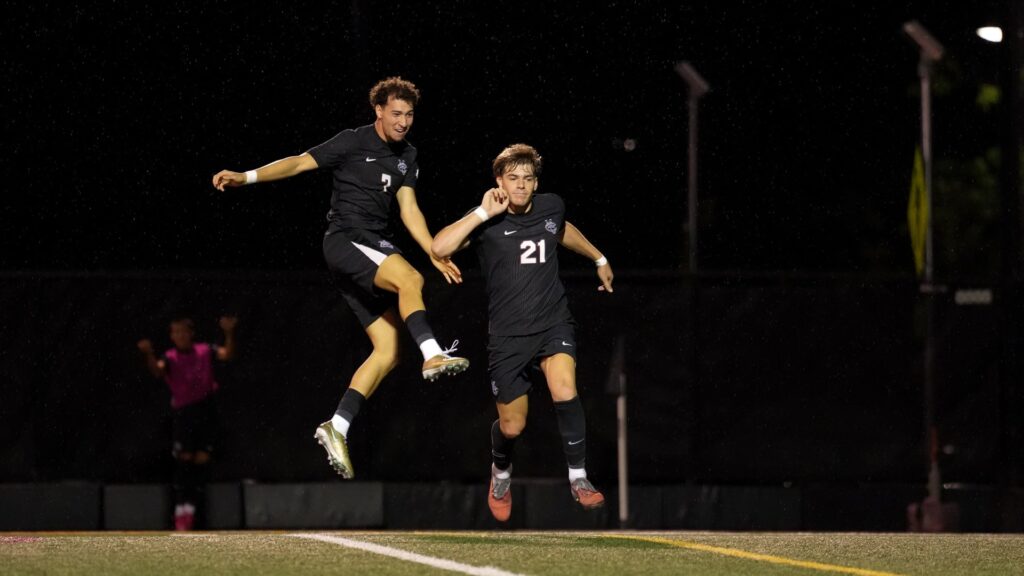
Pascal Janik Corvino Panfilo was born on December 20, 1999, in Zurich, Switzerland, but he grew up, as a person and as a player, in Emilia-Romagna. After taking his first steps on a soccer field alongside his dad Gianni, and meeting some of his best friends through his favorite sport, Pascal worked his way up to Serie D. A product of the Rimini youth system, he wore the jerseys of Romagna Centro and Santarcangelo, getting his first taste of the professional atmosphere.
“Being a professional soccer player has always been my dream. Something I really wanted to do and something I invested a lot of time in. In Italy I had been playing in Serie D for two years and I wanted to become a professional. Let’s say I found myself in a kind of limbo in my life: I had finished high school, I wasn’t studying, partly because I didn’t have time, but I was playing soccer, even though I wasn’t earning much, like all the young players. When you’re in Serie D you don’t have time to study, while I wanted to keep playing but, at the same time, also focus on my studies and build a future. Because studying is something that always pays off, no matter what. Having an education, a degree, is something useful, regardless of what you end up doing in life.”
In Italy it is extremely difficult for a young soccer player to continue his studies and, more generally, according to Istat data, four out of five young Italians are forced to give up sports because of their school workload. In Italy it is particularly hard to combine sports and school, and the older you get, the harder it becomes to balance the classroom and the soccer field. It is a situation Pascal experienced firsthand.
“This is a bit of a taboo, but in Italy, in my opinion, we are very far from making sports and school coexist. And that’s a very serious mistake. From the time you’re little, and even more so around 13 or 14, when your parents go to parent-teacher conferences, the teachers are the first to say: ‘Your son is always on the soccer field, he trains four or five times a week, he has no time to study, no time to prepare.’ And at the same time, soccer, the Serie D world, doesn’t really care much about school, or about the young player’s future.”
The desire to attempt the jump into professional soccer without giving up an education and the chance to have a future were two of the main reasons that pushed him to want to leave for the United States, seizing the opportunity offered by YWC. At the 2018 Padua Showcase, Pascal impressed everyone and took a first, decisive step toward his dream, getting selected right at the event to move to the States as a student-athlete.
“I did the Showcases in the summer of 2018 and then left in the summer of 2019. It took a while because you have to get your documents in order, and there are some exams to take, like the SAT, the aptitude test you take to apply to U.S. colleges… Things that take some time. In the meantime I played another year in Serie D, in Italy. I thought: ‘Who knows, maybe this is the year.’ In my head, though, I knew I would leave. Also because, yes, I wanted to play, but I also wanted to grow as a person, I wanted to pursue a university degree, to become passionate about something other than just soccer. And in America that works out really well. ‘That’s huge,’ I thought: ‘Yes, I want to keep playing. And I want to try to become a professional in the United States.’”
Pascal’s first stop in the U.S. was USC Upstate, a college in Spartanburg, South Carolina. Compared to the Italian soccer and school environment, the United States truly was a “new world,” a universe made of studying in college classrooms and playing soccer in the jersey of the Spartans, the university team, where he could fully live the student-athlete life.
“In the United States you have the chance to get an education that goes hand in hand with soccer, that allows you and gives you the time to play, even at a good level, because in NCAA Division I the level is really good. First of all, there are sports facilities like nothing I ever saw in Italy. And that definitely makes a difference, because you make the athletes feel comfortable. But above all, there’s great cooperation between school and studies, between professors, advisors and coaches. Everyone knows each other, everyone works together. Nobody points the finger at anyone else, like maybe happens in Italy, where the teacher scolds you because you think too much about soccer, while the coach maybe doesn’t care at all about school, and so, often, to go to practice you have to skip school. In the United States everything is in sync, they put you in the best position to train, play and study. It’s perfect, it’s a system that in Italy, in my opinion, we can only dream of, and it’s something to envy. Also because the United States is huge: you often have to fly to play an away game, you leave days before and come back days after, so you can’t always make it to class; but the professor knows that and puts himself in your shoes, for example by sending you a recorded lecture, so you don’t miss what he explained, and you always have the chance to stay caught up even if you can’t physically be in the classroom because of your athletic commitments. In college everyone works together, everyone cooperates, everyone helps each other, and in the end the one who benefits is me, the student-athlete. It’s phenomenal.”
The life of a student-athlete, however, is very different from how it is often portrayed: it takes sacrifice, commitment and dedication, because when you have the opportunity, it is necessary, in fact it is a duty, to combine academics and athletics. And just as in the university classroom, on American soccer fields too the stereotypes are just that, simplistic views that often do not survive contact with reality.
“College is great. You have a lot of fun, but it’s not what people think, it’s not a movie. No matter what, you train, you go to the gym, you go to class, you have to do presentations and projects, take exams, midterms, finals… Then yes, you also party, because you do party, but parties in college, which is kind of the image everyone has when they think of American college, are 2% of everything American college is and represents. Maybe someone about to leave for the United States might think: ‘I’m going there to party, have fun and play soccer.’ But no, that’s not how it is. There are so many other things to do and to take into account if you want to succeed. As for the level of soccer, I was truly amazed. In 2018-19, when I left, it was one thing, but you could already see that the level was rising, that many more people would be going over in the following years. But even back then the level was, and still is, really high. You see players who could easily play at a very high level in Italy and make a difference. Maybe in our soccer, unlike in the United States, there’s that extra experience that they obviously lack, because in America the oldest players are, for example, 23 or 24, while in Italy you find men who are 34, 35 or 36, who have been playing for twenty years and so have that extra experience. In any case, Americans are much, much more athletic. When I first got to the United States and went to the gym three or four times a week to do squats, loading I won’t even say how much on the bar, I’d say to myself: ‘What is this?! I’m going to break my back here.’ And then you see them jumping, moving, going left, right… And on the field they’re always going full speed! In that respect they really are athletes. Their soccer is very physical, very fast, very intense. It’s less tactical, much more end to end. You see much more open games, where maybe 3, 4 or 5 goals get scored, while in Italy we’re a bit more organized tactically. In America I get the feeling that everything is always done at full speed. In the gym, on the field, when you play… Always.”
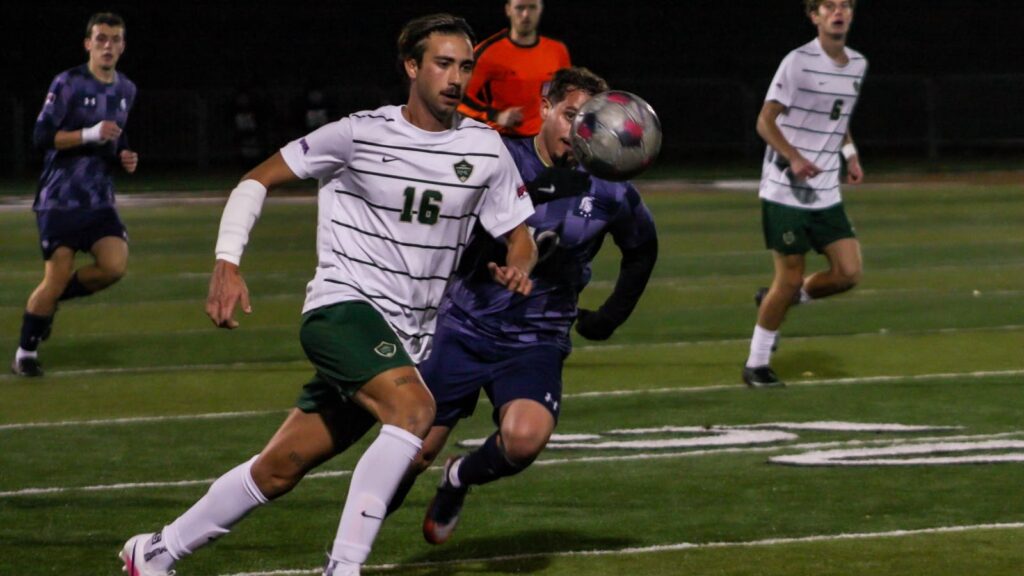
Pascal’s two seasons at USC Upstate were full of success and satisfaction, on and off the field. Thanks to the efficient American academic system, he was able to keep studying, to train for and build his future, while in the Spartans’ number 23 jersey things went, if possible, even better. Perhaps, in a sense, even too well. 25 games in two years, all as a starter, with 8 goals, plus a spot on the second team in his second year, after being named in his debut season to the first team of the Big South Conference, the regional conference in which the USC Upstate soccer team competes. Having become a starter in the black and green right away, Pascal began to feel that his conference was a bit too small for him, as it was not one of the most competitive in NCAA Division I, the highest level of American college soccer. That level had a lot more to offer him. And so Pascal began to want something more.
“I left with the desire to make it. And I told myself: ‘Come on, in one or two years I can make it and go play somewhere.’ One of the reasons I left Italy was to challenge myself, personally and as a player, and in my opinion at Upstate I had slipped a bit into my comfort zone. So I decided to challenge myself again, to start over from zero, and to change universities for my last two years. And I left a team where I had done well and felt very comfortable.”
“Taking the road less traveled,” as they say in America: acting independently, free of other people’s influence, taking the road that many would never even have thought of taking, only to find that it is precisely that path that leads to the destination you set for yourself, the goal for which the journey began. After USC Upstate, Pascal had two options: go to the University of Rhode Island, which guaranteed him a full scholarship and a sure spot on a good team, albeit one that was rebuilding, or go to Missouri State, where the scholarship did not cover all the costs and a starting spot was anything but certain.
“I had the opportunity to go to Rhode Island: a great team that plays in a strong conference, with good players, coached by two great coaches. I knew that if I went there I would play, and I would have a leading role. And then there was Missouri State. At the time it was top ten in the nation, with lots of strong players with impressive backgrounds: there was a guy who had played for Manchester United, another from the Burnley academy, Italian players who had been at the highest levels… Really an out-of-this-world level. But I knew I wouldn’t have a guaranteed spot. In fact, right from the start they told me: ‘We have strong players here, we’re not top ten by accident. Come here and compete for it: if you’re better than them you play, if you’re not better than them you’ll have to work in training to prove you can play.’ I decided to go to Missouri State. Because I told myself: ‘In the end, this is what I’m trying to do, this is what I want to do. I want a challenge, I want to feel the fire inside, I want to go to practice knowing I have to sweat to be able to play on the weekend, knowing I have to go out and earn a spot. I don’t want to go somewhere where things will be handed to me, let’s say, “no matter what,” where everything would be more of a given.’”
For anyone else, the choice between a college that guarantees a full scholarship and a spot on the team, and a university where you have to cover part of the costs and face fierce competition to try to earn your minutes in training every day, would have been obvious. But not for Pascal, who had left Italy and come to the United States to fulfill his dream: becoming a professional soccer player. That was his goal, a compass to reach the destination of his professional and life path, the thing he felt he had to look to in order to guide his choice.
“It was a bit of a gut call on my part. No one ever said anything bad to me about Rhode Island, the coaches, the facilities, the school: everyone always spoke well of it. I knew they played in a really tough conference, and when I went there to talk with the coaches, I saw that they had a very serious program. During the meetings, the Rhode Island coaches told me: ‘Look, we’re rebuilding the team.’ I answered: ‘I want to become a professional soccer player. I want to try, at least.’ And they told me: ‘It will be really hard to go pro from here by the end of these two years, because we’re in a rebuilding phase and, in our view, it will take at least a couple of years for the team to get back to the level we were at before.’ They were about to start a new cycle, they were rebuilding the team, and that held me back a bit. At Missouri State, on the other hand, in those years, besides one of the best academic programs, they had one of the strongest teams in all of America. And the stronger the team you play for, the more games you win and, automatically, the more exposure you get personally. The fact that they were high in the rankings, that they were one of the ten strongest rosters in the United States and, maybe above all, this challenge, the fact that I had to earn a starting role and a leading role, is what motivated me and pushed me to decide to go to Missouri State. I wanted something that would keep my passion alive, that would keep burning the fire that had faded a bit at Upstate, not because I wasn’t happy there, quite the opposite, but precisely because I was really comfortable. Too comfortable. I wanted something that would make me sweat, even if maybe not as much as I actually ended up sweating.”
The life of a student-athlete is not like the movies, in the classroom or on the soccer field. There is no fixed screenplay in which the hero is destined to triumph, no script that guarantees that, because you chose the harder road, you will surely and safely reach your destination. Quite the opposite. And indeed, Pascal’s first experience of Missouri State was quite difficult. More generally, his entire first year was complicated. He was held back by two of the most frustrating and difficult obstacles a young player can face: injuries and a poor relationship with the coach, Coach Michael Seabolt.
“My first year I arrived and got injured. I strained my hamstring and was out for a while, about a month. And then, in my opinion, in the first year Coach Seabolt couldn’t stand me. Honestly, I felt like a number, so in a way I couldn’t stand him either. Coach Seabolt is very unconventional: it doesn’t matter who you are or what you’ve done before, at the college level or in your own career, in Italy or elsewhere, when you arrive at Missouri State you start from zero. And there’s a pecking order. He relies a lot on players who have been on the roster for a long time and who have already shown him they can play at the level he thinks you have to play at Missouri State. He trusts players who have been with him for a long time and, in any case, he has principles, both soccer and moral, that you have to learn. He’s extremely professional and wants the rules he sets, which are clear and firm, to be respected on and off the field. And on the field, as soon as you step out of line a little and do something that isn’t part of his plans, you really struggle to get playing time on game day. And at the beginning that’s kind of how it went: I was used to being a key player on the field and I did what I thought was right, while he had other ideas and preferred other types of players. It took me a while to adapt. I felt I was in a tough situation, like: ‘If I dribble past four players and score from midfield he looks the other way without saying anything, but if I miss a five-yard pass I never see the field again. It doesn’t matter if I train well, harder and harder, I still don’t play. And those few times I do get on the field and make a small mistake, well, that becomes the excuse to make things even worse.’ That’s how I felt. And even though I never let anyone notice, except my parents, sometimes I thought: ‘What a stupid mistake I made.’”
Pascal’s first year was especially difficult. First an injury, then a poor relationship with the coach. A one-two punch that could knock anyone out. And, as often happens, insult was added to injury: the American college system, in fact, allows a player to change universities, and therefore teams, only once over four years. After leaving Upstate, Pascal was essentially forced to stay at Missouri State. His back was against the wall, but above all he was away from the field, first because of an injury and then by the coach’s choice. A very complex situation. One that, once again, put him in front of a choice: give up, or keep chasing his dream.
“In America it doesn’t work like in Italy, or like in the rest of the world. There’s no summer or winter transfer window where, if you’re not happy in one place, you just pack up and go somewhere else. In the United States you can only transfer once in four years. So I was locked in, I had already used the transfer portal. If I wanted to finish my studies I had to stay at Missouri State, there was no other option. There were moments when I asked myself: ‘What am I doing?’, but complaining was a waste of time. ‘It’s either Missouri State or Missouri State,’ I told myself. So I tried to adapt, to understand and learn what Coach Seabolt said and wanted, and in my second year I started playing more. Basically after a year and a half, at the start of 2023, I was a starter. And I started to feel like I did at Upstate, or maybe like I would have felt if I had gone to Rhode Island. At first it was tough, because I didn’t get the playing time I wanted, I wasn’t really comfortable soccer-wise and I felt a very distant relationship with the coach, but all these things made me grow, both as a player and as a person. I wanted to become a soccer player, a professional after Missouri State, so I kept training, at full speed, harder and harder, with my head down. And in the end, after two and a half years at Missouri, I got my opportunity.”
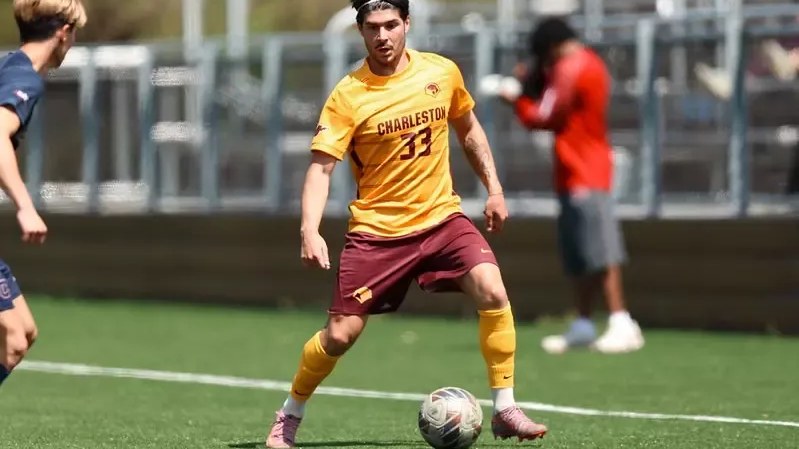
In his first year with the Bears he made 5 appearances, for fewer than 40 minutes in total. In his second year at Missouri, he played over 300 minutes, with 17 appearances in 18 games. In his third year, 13 games, 10 starts and almost 800 minutes on the field, slowed down only by an injury. After three years in which the Bears always reached the knockout stage of the NCAA Division I championship, winning the highly competitive Missouri Valley Conference twice, and after more than 1,000 minutes played over a total of 35 games, the last one in the second round of the playoffs, a 3-1 loss to Stanford, who were later stopped in the quarterfinals by eventual champion Clemson, the time had finally come for Pascal to try to make his “American dream” come true: becoming a professional.
“Shortly after we were eliminated by Stanford in the NCAA Tournament, I started being in contact with Nico Luque, who at that time was an assistant coach with the Greenville Triumph. He knew that would be my last college season, and also that I wanted to become a professional. He asked me: ‘What are your plans? How are you physically? How are you mentally?’ He knew that at Missouri I’d had two fairly serious muscle injuries. ‘Physically I’m fine, I’m back,’ I told him, ‘and of course I want to try to keep playing.’ Around the time we were talking, it looked like he was about to become head coach of the Greenville Triumph. He told me: ‘I have a good chance of becoming the team’s coach. Come join us.’ Shortly after, at the end of the interviews, the Triumph chose someone else for the job. ‘They hired Rick Wright, he’s the new coach,’ he told me. ‘He doesn’t know you, so he certainly can’t sign you to a contract now. But come do preseason with us and we’ll see how it goes.’ ‘Okay,’ I answered. So I bought my ticket and left. Shortly after, he called me back and said: ‘Look, I got an offer from Creighton University. I’m going to take it.’ And today, in fact, Coach Luque coaches there. Basically, I found myself doing preseason with the Greenville Triumph, but the person who had wanted me wasn’t even there anymore. In short, I was on my own. But I arrived in shape, I felt good, because I had trained a lot, and I was ready.”
After Missouri, fate brought Pascal back to South Carolina, the very state he had left in search of a new challenge. And after leaving USC Upstate to wear the prestigious Bears jersey under Coach Seabolt, a new test awaited him: getting through the tough tryouts with the Greenville Triumph in order to sign a professional contract. Two weeks of trials, with the opportunity of a lifetime at stake.
“There were a lot of guys on trial. And they were all really, really good. And then there was another obstacle, the ‘international spots.’ Only seven players on a team of twenty-five can be internationals. When I arrived, five of those spots were already taken. ‘Look, we only plan to sign one international player, to get to a total of six. We’re keeping the last spot open, because you never know,’ they told me. Basically, there was only one open spot. So it wasn’t like I was battling other midfielders: I was competing with all the internationals who were on trial with me, whatever their position, whether they were fullbacks or wingers… The pressure was intense. The first week there were about ten of us: they kept only two players, me and another guy. The second week another ten players arrived. And in the end they signed only two players: Zion Scarlett, a nineteen-year-old from Columbus Crew 2, in MLS NEXT Pro, and me.”
After his years in Italy, up to Serie D, his seasons at USC Upstate with the Spartans and those with the Bears of Missouri State, after a very brave and risky choice that turned out to be the right one, Pascal Janik Corvino Panfilo is now a professional soccer player. His team is Greenville Triumph Soccer Club, which competes in USL League One. Successes and defeats, easy choices and tough decisions, goals and injuries, exams and fun, joys and dark moments, and finally a dream come true: the United States seems, and in some ways is, another world, but for Pascal it is now his present and his future, on and off the soccer field.
“The main thing I learned in America is that, despite injuries, despite the fact that you may find yourself dealing with people who don’t rate you, or who don’t ‘see’ you as a player, you always have to keep working and doing things the right way, because sooner or later you get rewarded. That’s what I believe. If you’re a decent person and you do things properly, if you’re someone who smiles and brings good vibes, I think it’s really hard not to find your way. And beyond school and soccer, in the United States I always felt accepted, from day zero, when I didn’t speak English and found myself there alone. I always had a lot of people by my side who helped me, I always felt comfortable. So much so that if I hadn’t become a professional I would still have chosen to do OPT and work in America before coming home. It’s an experience I absolutely recommend. As a player it helps you grow a lot, and as a person even more. I feel like a completely different person from when I left. It’s an experience that changes you, and you meet so many people from all over the world. It’s phenomenal. I think those were the best four years of my life.”
Pascal’s dream is now reality. And now it’s time to look ahead to his next goals.
“Now I’m in USL1, the third division. I’m 24, I’m not old, but I’m not 19 anymore either: if the right situations come along that let me grow as a player, maybe I can get to the Championship, or maybe even MLS, within 2 or 3 years. It would be a dream, it would be amazing. I’ll definitely try, I’ll work hard to try to make it happen. And if it doesn’t happen within 3 or 4 years, when I’m 27 or 28, I’ll be able to say I tried, and maybe I’ll start looking at other paths, looking for a bit more stability, also because we know how soccer works, one day you’re in one place and the next day you’re somewhere else, so… If that jump doesn’t come, I’ll think about it in a few years, but right now the goal is to play in the higher leagues here in America, whether it’s MLS or the Championship. Although MLS would really be the cherry on top.”
Want to follow the same path? Find out how soccer scholarships in the USA work and how to get one with YWC.
Article by Niki Figus